Monday, August 17, 2015
Sierra Nevada Oktoberfest (with Brauhaus Riegele)
In the IGB beer calendar, August begins the Oktoberfest/Pumpkin Beer season. Especially when we get a rare cool day (like today!). I've reviewed a precursor to this beer before http://ill-gottenbooty.blogspot.com/2014/09/sierra-nevada-oktoberfest.html but this is a new version in collaboration with the Brauhaus Riegele in Bavaria. After the first couple of sips I predict that this will be one of the best Oktoberfests of the season. Very much a Märzen in the German style, hoppy and not cloyingly sweet like many American Märzens. Hoppy, but not especially bitter, peppery notes with some breadiness as well; a little bit of honey and caramel. Absolutely one that I will go back to.
Wednesday, August 12, 2015
Sierra Nevada Kölsch
Inspired by the great beers of Köln Germany, Sierra Nevada hit the jackpot with their Kölsch. Pouring a bright gold color with a snowy white head, this ale-lager hybrid is probably the best representation of the style I've tried to date. Aroma of fresh bread, a little coriander and a sweet crispness that is refreshing, yet full of flavor. Three thumbs up
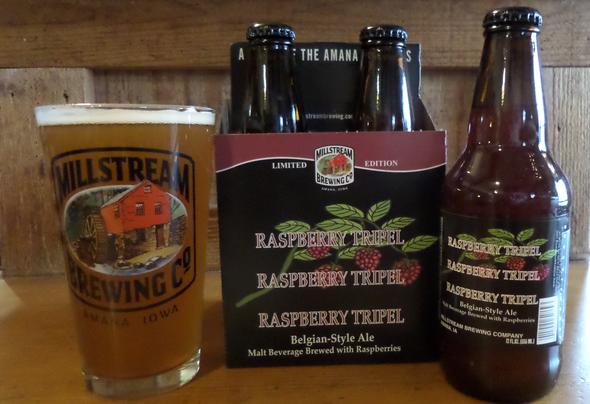
Millstream Raspberry Trippel
Oftentimes with fruit beers, the fruit overwhelms the "beeriness", while a well-crafted fruit ale balanced the fruit against the hops and malt for a complete brew. Lately I've just lucked out with fruit beers, or maybe I've just chosen wisely. Millstream's Raspberry Trippel is a Belgian Trippel in every sense of the word, nicely hopped, with that distinctive character that the Belgians made famous - copied in saisons and farmhouse ales the world over. It poured an amber hue, a bit lighter than I've come to expect from trippels, with the aroma of raspberries massaging my nostrils. There's abit of apricots and figs hiding in the back as well. Another fine brew that gets the IGB seal of approval.
Odell's Brombeere Blackberry Gose
Let's start with what a "Gose" is. A Gose is a regional beer style originating in Goslar Germany; it is a sour ale made from at least 50% malted wheat with coriander and salt added. While this technically outs it outside the traditional German beer purity standards, an exception is made due to it being a regional specialty. They also tend to be low in alcohol content, making them nicely sessionable. Brombeere poured a pale violet, with a small head into a bar pint glass. The aroma of blackberries was evident, but not overwhelming. True to the style, there was little hop bitterness. I didn't detect any of the coriander which was part of the mix, nor any particular saltiness. This was a very drinkable, light offering that I would definitely try again. I'm not usually one for fruit-flaovred beers, but Brombeere may have converted me.
Thursday, July 9, 2015
Bottles or Cans? Always Pour Into a Glass
While at Lazlo's Beer Tour this past Monday night a question was posed to Jim about cans vs. bottles. Many of the newer craft beer companies are packaging their beer in cans, when it has been the practice over the last few years to go with bottles - so much so that, for many people, the experience of craft beer is connected to bottles, while cans are looked down upon and connected in the culture to "mass-produced". Part of the reason that start up breweries (until recently) packaged in bottles was that it was cheaper (until recently) to bottle as compared to cans. In the last few years this trend has reversed and it has become very affordable to can: the equipment is affordable and the cost of cans is much lower than that of bottles. Some brewers (including Sierra Nevada) have done controlled taste tests comparing canned vs. bottled beer and there is no discernable difference. There are several benefits to canned beer for the consumer. The main one is that the can protects the beer from UV light, the main culprit in "skunking" beer. Cans are lighter and pack more efficiently. They are easier to carry in and way easier to carry out when bringing beer to a picnic or camping trip. Since they crush when empty, they don't take up as much room in your trash. As a follow up to this conversation, Jim said that a bottle is a delivery package for beer, not something that you should drink it out of. Several things happen (or fail to happen) when you drink beer out of a bottle: not enough CO2 is released, affecting the taste; and you are cutting off your sense of smell, which, as any 5th grade science student knows, is a huge component of taste; you don't get a head, which, among other things, traps some of the aroma (and therefore flavor) in the bubbles. Drinking out of a can is somewhat better than a bottle, since you have that round flat surface of the beer separated by air from the top of the can, allowing some air flow. Jim's advice was pour your beer into something, even if it's a plastic cup.Sunday, July 5, 2015
Lagunitas DayTime Fractional IPA
Yes! A sessionable IPA that is also high in hop content. DayTime crosses the finish line at 54.2 IBU, but only 4.65% ABV. This was truly tasty IPA, with a nice mix of grapefruity and piney hops with just the right amount of bitterness. Some citrus in there as well. Lagunitas does it again!
Oskar Blues: Old Chub Scotch Ale
The final beer in my three-beer Oskar Blues fest on July 4th. Completely different than the other two. A good representation of the Scotch Ale style, Old Chub and a rich, creamy consistency and a flavor profile redolent of coffee and chocolate. A breath of smoke hiding out in there as well!
Subscribe to:
Posts (Atom)